Storing your motorhome and caravan for winter
The leaves are falling, days are colder and nights are below freezing—camper owners know these are the signs that it’s time to winterise their motorhome or caravan. Proper winterising protects your camper from damage, so you can start the next camping season in spring without any worries.

The most important points at a glance
- The conditions at your winter storage location determine which steps are needed for winterising your vehicle.
- Thorough exterior cleaning and optimal care of the living area will protect against damage.
- Leisure batteries require particular attention, and both gas and water lines should be fully emptied.
Finding and preparing a place to store your vehicle over winter
If you have found a storage space for your camper that you use all year round or rent specially for the winter, it’s important to assess whether any additional precautions are required. If you’re storing your vehicle outdoors with no cover, you should pay special attention to the roof, rooflights, and all seals. Everything needs to be absolutely watertight, so that neither snow, rain nor standing water can seep inside. Even leaves, small twigs and pine needles left on the roof can cause leaks—especially if they press down the seal, which then becomes porous. In addition, it’s advisable to park your camper at a slight angle to allow water to drain off easily.
If you use a tarpaulin or cover for your camper, make sure that it doesn’t rest directly on the bodywork, otherwise air will not circulate sufficiently. This can cause unpleasant smells, moisture and even mould. For caravans, there are also special covers for the drawbar and drawbar box to protect against the elements.
If you have a covered outdoor spot or store your vehicle in a garage, hall or barn, there’s no threat from moisture coming from above. In these cases, however, another risk can arise: mice. Barns and sheds in particular tend to provide opportunities for rodents to take up winter residence in your motorhome. With luck, they’re simply hibernating there; worse, they might gnaw on cables and furnishings. For this reason, it’s wise to give the interior a thorough tidy-up and clean, so mice are not attracted in the first place. An ultrasonic device may also help to keep them away.
Exterior cleaning and technical checks
Giving your camper a good clean before putting it into winter storage is much like a spring clean at home—except it’s done before, not after, winter, and your motorhome or caravan will thank you for it. It’s also important to look after the technical aspects to ensure everything survives the cold season in top working order.
Carry out thorough exterior cleaning
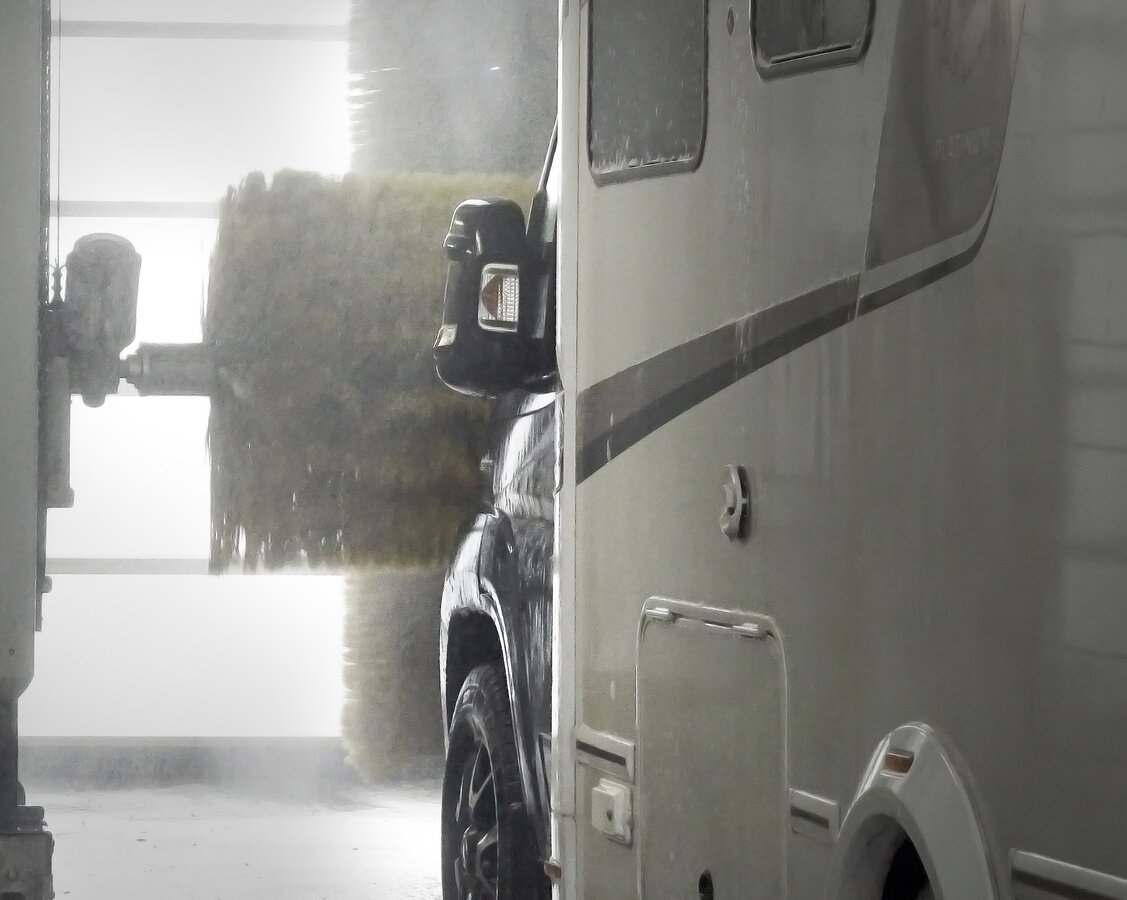
Dirt left on the surface can become a problem as temperatures change and damp sets in, leading to leaky seals or rooflights. Washing your vehicle is possible at official self-service wash stations for motorhomes, as well as in facilities designed for large vehicles.
The first step is to rinse off the outer surfaces and scrub carefully with a brush and detergent—a thorough underbody wash is also recommended to free the chassis from dirt. Don’t forget to clean the wheel arches. Windows and rooflights are usually made of acrylic, so they should be handled with care and special cleaners and cloths should be used to avoid scratches. Once washed, leave everything to dry—the exterior cleaning can take some time depending on vehicle size.
Check tyre pressure
If you’re already on your way to wash your vehicle, or on the drive home, you can also increase the tyre pressure slightly—up to 0.5 bar above the usual value is recommended.
Turn off gas bottles and drain water pipes
When your motorhome is back at its winter storage location, there are a few important jobs that you don’t usually need to do when stopping for a short trip. Since your camper—depending on the storage location—can be exposed to below-freezing temperatures during winter, it’s advisable to drain all water completely—this includes not only the fresh- and waste-water tanks but also the hot water boiler, heater, and especially all pipes. Blowing through the pipes with air protects the taps from frost damage, which can otherwise result in expensive repairs or the need for replacements. A blown-up balloon works well: fit it over the tap and let the air force the water out of the system. You can also turn the taps on again once everything is empty and the pump is off.
When it comes to the gas supply, the gas bottle valves should be closed and the hoses unscrewed. Next, blow out the gas lines—this can be done simply by turning on the cooker until any remaining gas escapes from the pipes.
Care for your leisure battery (batteries)
If you can’t regularly recharge your 12-volt leisure battery in winter (by connecting to mains electricity or using sufficient solar power), it’s best to remove the battery (or batteries) to prevent deep discharge. The exact requirements and charging intervals will depend on battery type and size, but if you can’t charge at all for several months, removal is the safest option. Before removing, charge the batteries as fully as possible. They will then survive the winter best if stored in a frost-free room.
Additional features: Suspension, manoeuvring systems & more
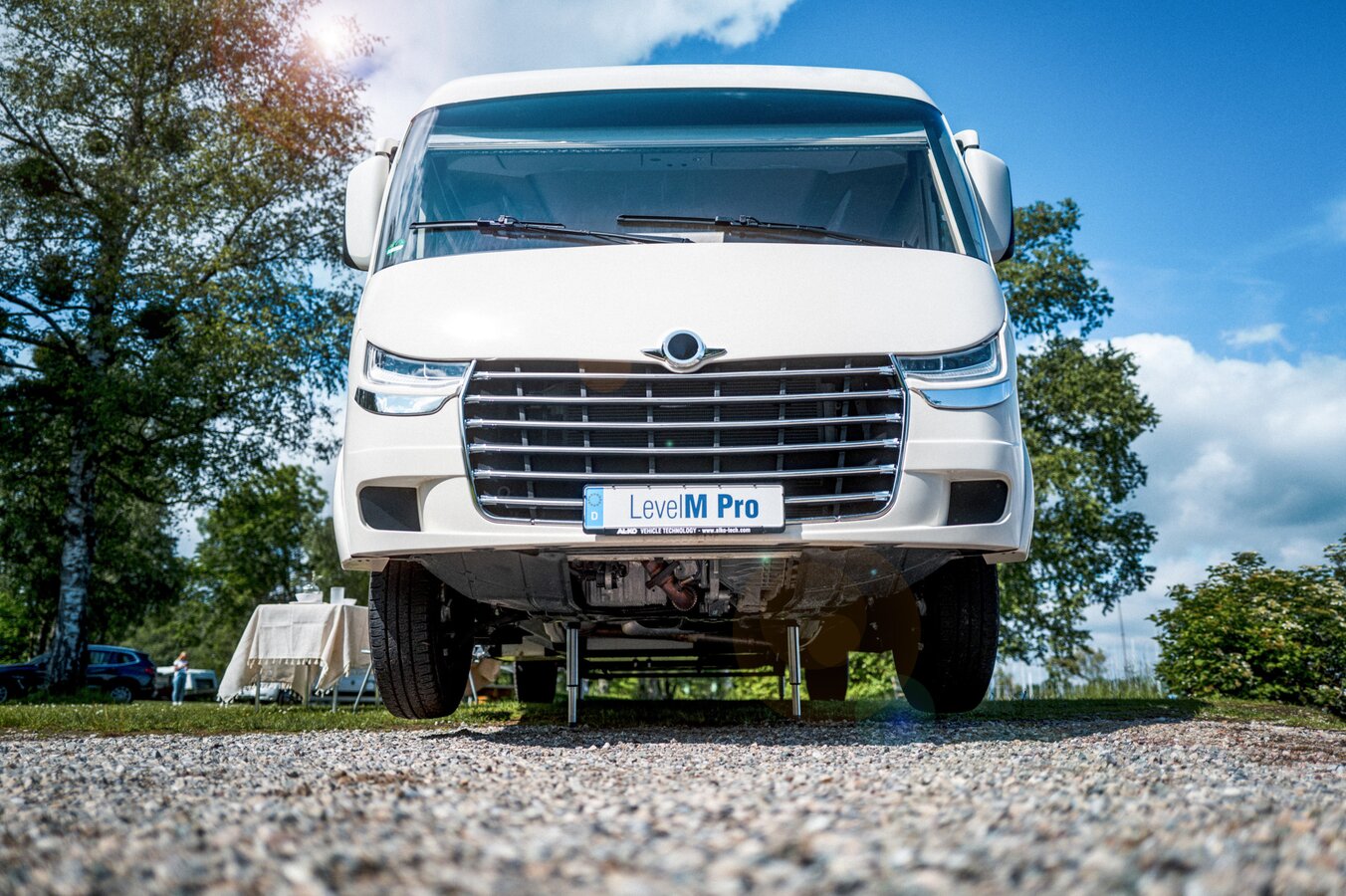
On your motorhome or panel van, all AL-KO VT suspension and support systems like HY4 or LevelM Pro can be put into winter storage without requiring maintenance. If you have an air suspension system installed, it’s advisable to set it to its driving height (or for manual air suspension, to the standard operational pressure), so the bellows are not left without pressure. If combined with a support system, simply leave the air suspension in travel mode or deactivate the automatic air suspension—this allows the support system to stabilise the vehicle, without the air suspension rolling out. Optional equipment such as the AL-KO VT MAMMUT manoeuvring system, the ATC anti-snaking system and the stabiliser coupling do not require any special maintenance for winter storage.
Clean and store accessories
Antennas, satellite systems, awnings and canopies should also be thoroughly cleaned before being put away for storage. For permanently installed awnings, it’s also a good idea to grease the joints. Bike covers, ground mats and other accessories should also be stored clean, as this prevents crumbs and dirt and ensures they’re ready for use again in spring.
Winterising the interior
Winterising the interior of your camper is not much different from what you would do during regular holiday breaks—perhaps just a little more thorough in some places. Here’s a summary of the key steps:
- Remove all food and drinks
- Clean and dry the fridge, and leave the fridge door open
- Clean the kitchen and/or kitchenette thoroughly
- Clean the bathroom and thoroughly rinse the toilet cassette, for example with a chlorine-water mix
- Clean furniture with gentle agents, such as mild soapy water
- Stand seat cushions upright for good air circulation
- Vacuum and clean all surfaces, the floor and inside cupboards to remove food residue, crumbs and the like
- Leave cupboards or lockers open where possible to ensure good air circulation
- Remove moisture-absorbing materials like clothes, towels, kitchen roll or toilet paper
- Remove all electronic devices
To keep locks and hinges working smoothly in the coming season, lubricate them. Suitable products for maintaining seals are available from camping and caravan shops. On the caravan, give the handbrake and jockey wheel a small amount of lubrication as well.
Level your vehicle
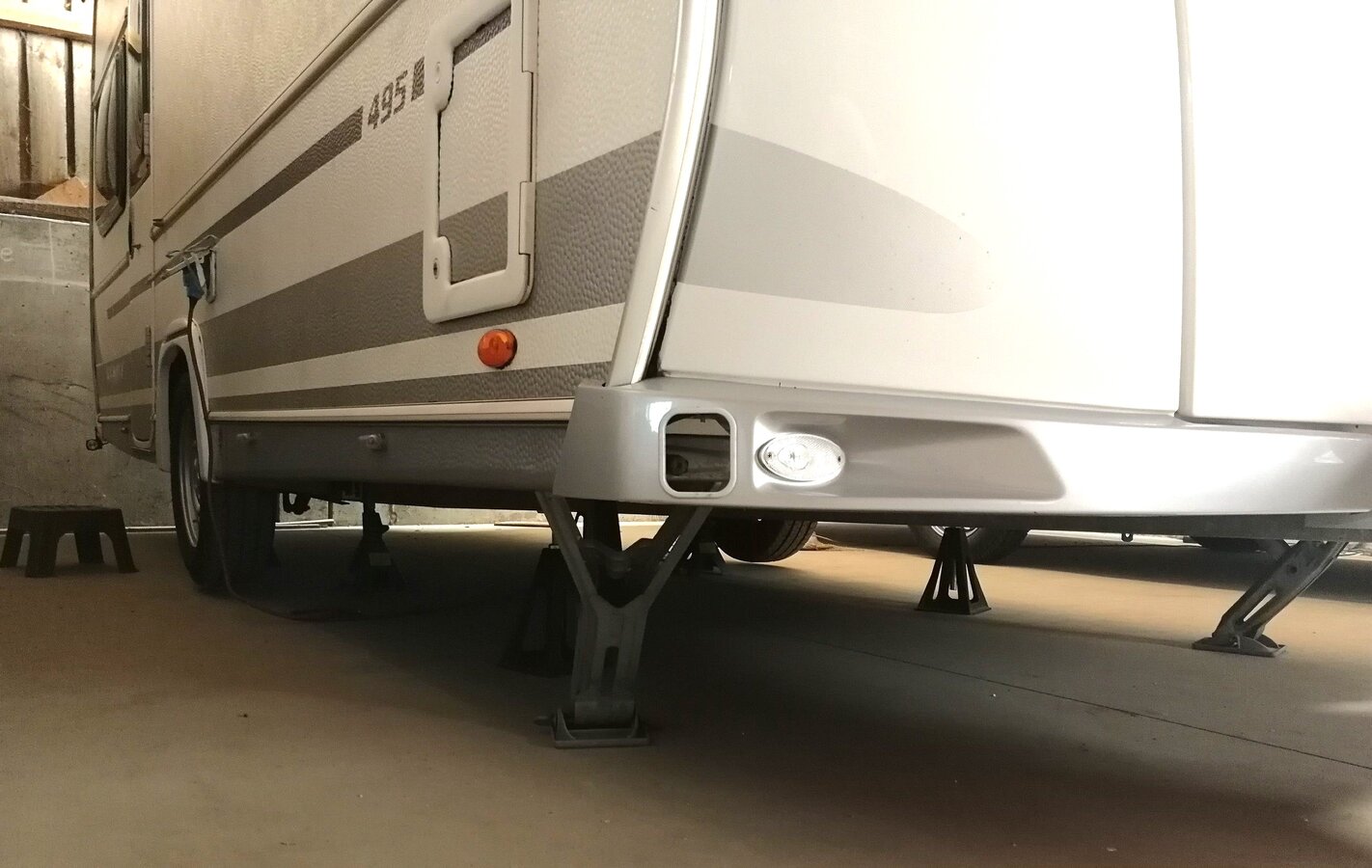
Once everything is ready, position the vehicle so that it is level and minor unevenness is compensated with drive-up ramps or blocks. If you have installed a support system, you can use it to balance out uneven ground. On a caravan, wind down the corner steadies to give it sufficient stability in position.
But take care: The caravan must never be levelled using the steadies alone—this can damage the body permanently! For extra caution, you can also use axle stands or jacks for further support, but only relieve the axle slightly, making sure the wheels maintain contact with the ground at all times. Only the engine and windscreen washer antifreeze need topping up, and don’t forget to flip up the wipers to prevent the rubber sticking to the glass in frost. Tip: If possible, don’t engage the handbrake for the winter, as the brake shoes may seize inside the drum.
Are you a winter camper?
Love the idea of snowy adventures, ski slopes and cosy evenings in your motorhome when it’s really cold outside? Then check out our tips for winter camping!

Once you’ve subscribed, you’ll receive exclusive information about products, news, special offers and more, straight to your email inbox.